World’s Largest Span! ZC Space’s 56-Meter Movable Air-Rib Inflatable Membrane Reaches the “Roof of the World”
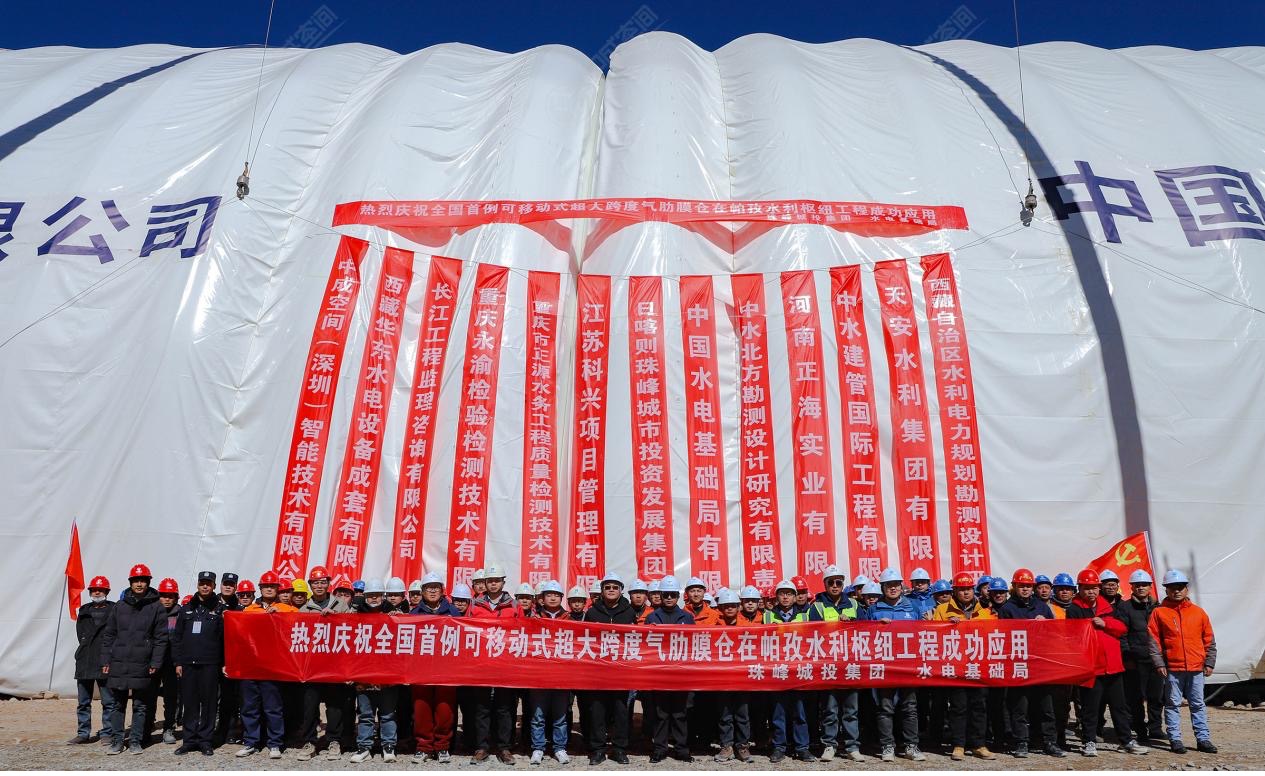
Beneath the azure sky on the “Roof of the World,” ZC Space, in collaboration with Zhufeng City Investment Group and PowerChina Foundation Engineering Bureau, has recently completed the world’s first 56-meter super-large-span movable air-rib inflatable membrane project—the super-large-span air-rib inflatable storage facility at the Tibet Pazhi Water Conservancy Project.
This project not only breaks the span record for air-rib inflatable membranes but also sets a new benchmark for plateau infrastructure and green construction with its breakthrough “movable” design in high-altitude, extreme-cold environments. It has garnered attention and coverage from central, provincial, and municipal media outlets such as People’s Daily Online, China News Network, and China Tibet Online.
56-Meter Super-Large Span: A World Record
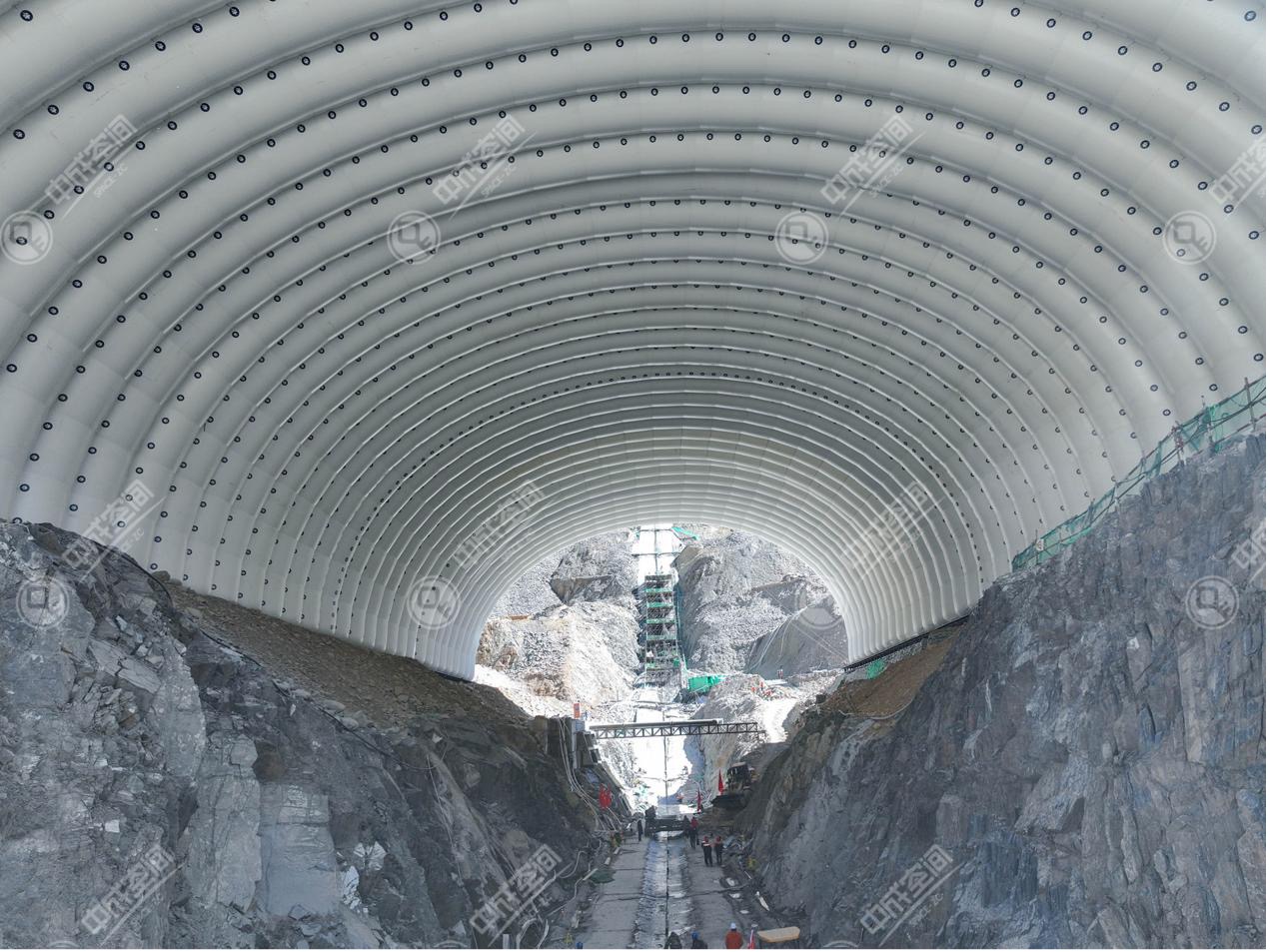
The core of the project consists of two main components: a high-strength air-rib main body and a constant-pressure intelligent control system. Through high-precision simulation verification and innovations in material technology, it overcomes challenges related to structural stability in high-altitude, low-oxygen, and extreme-temperature environments. This brings new breakthroughs to the asphalt concrete core wall filling of the dam, significantly advancing the construction of this major water conservancy project.
By breaking the technical barriers of traditional air-rib membrane span limitations and successfully achieving a 56-meter super-large span, it pioneers a new paradigm of “flexible infrastructure.” Previously, ZC Space had demonstrated the technical maturity of air-supported membrane structures with a 205-meter maximum span in the Xinjiang Baicheng project. This latest achievement elevates the span of air-rib structures to new heights, reaffirming the company’s industry-leading capabilities.
Ushering in a New Era of “On-Demand Movable Inflatable Membranes”
The project introduces an innovative integrated solution of “flexible membrane material + intelligent air-rib + movable base.” It enables easy installation and disassembly, high reusability (supporting modular reassembly over 20 times), and overall relocation with an error margin of only ±5 cm. This represents a deep integration of material science, intelligent control, and structural engineering, driving the transformative shift of inflatable membrane structures from “fixed entities” to “dynamic systems.”
The base of the inflatable membrane structure uses a prefabricated, modular foundation. The super-large-span intelligent air-rib membrane is fixed onto a self-developed movable track platform, which is driven by motors to move back and forth along the construction工作面 (work surface). This effectively addresses challenges such as windproofing, rainproofing, and winter insulation for asphalt concrete core wall construction in high-altitude regions.
This technical solution can quickly adapt to changing site requirements, reducing overall costs by over 40%. Its unparalleled ease of installation, relocation, and disassembly enables highly efficient and economical space utilization, fully demonstrating the dual advantages of air-rib inflatable membranes in improving efficiency and optimizing resource use.
Dual Achievements in Efficiency and Quality
The Tibet Pazhi Water Conservancy Project is one of the 150 major water conservancy projects designated by the State Council. It is currently the highest-altitude national major water conservancy project under construction in China and a key initiative under the Tibet Autonomous Region’s “14th Five-Year Plan for Water Security.”
Due to the geographical environment and harsh climate conditions—including strong winds, heavy rainfall, extreme cold, and significant temperature variations—the annual optimal construction period for the dam’s asphalt concrete core wall is only four months. The air-rib inflatable membrane structure, with its windproof, rainproof, insulating, and flexible properties, successfully mitigates the impact of adverse weather on construction quality. It significantly improves filling efficiency, shortens the construction period by approximately 10 months, meets the need for on-site flexibility, and ensures the timely achievement of subsequent project milestones.
This solution provides a satisfactory answer to constructing an all-weather operational barrier for the Tibet water conservancy project. It plays a vital role in advancing the subsequent phases of the project, promoting socioeconomic development in Tibet’s Shigatse region, driving rural revitalization, and improving the ecological environment.
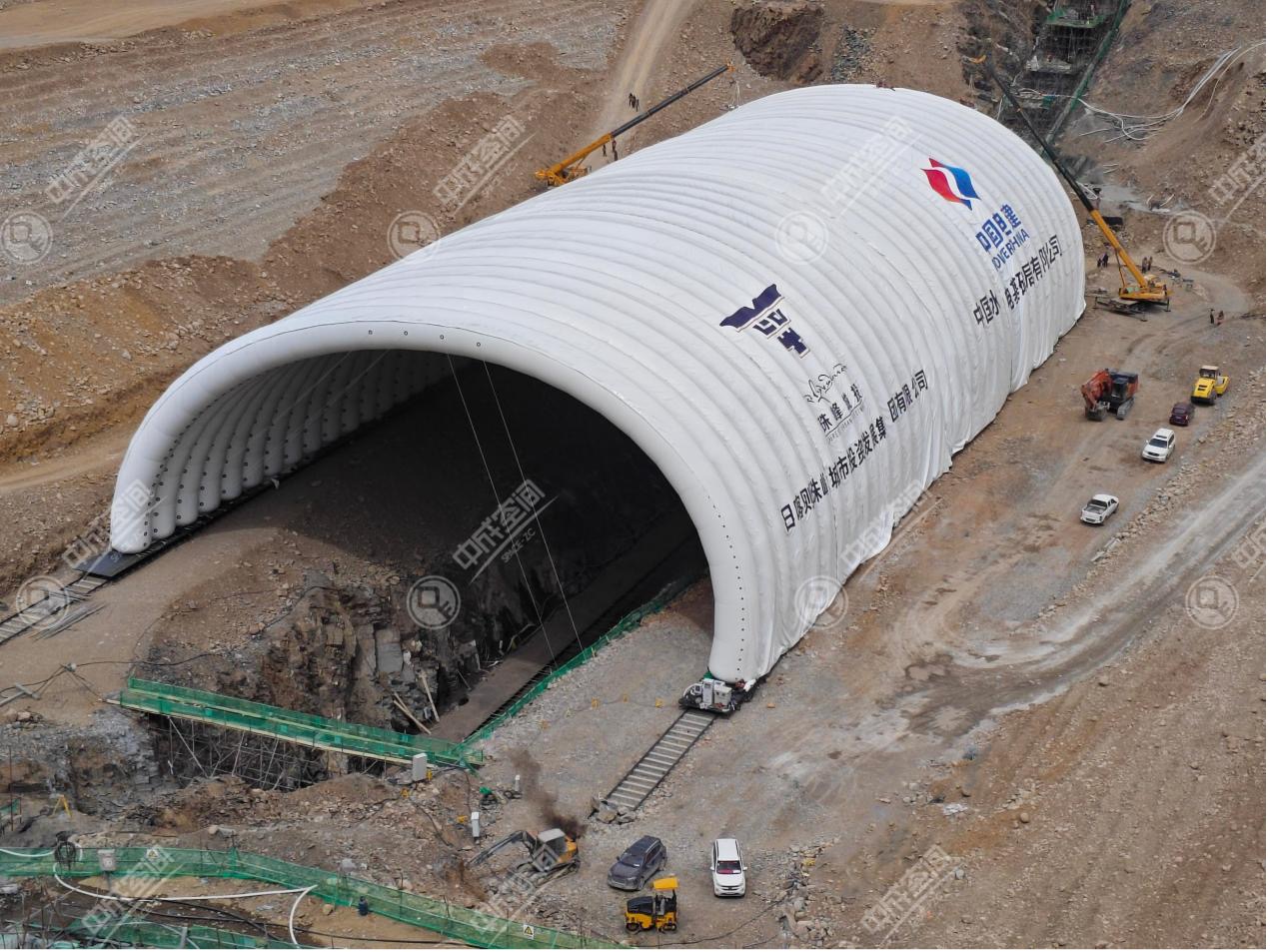
The completion of the super-large-span air-rib inflatable membrane project at the Tibet Pazhi Water Conservancy Project is yet another testament to ZC Space’s commitment to building a “technological moat.”
With its record-breaking span and pioneering mobility, the super-large-span air-rib inflatable membrane breaks through the dual boundaries of physical space and engineering environments. It not only demonstrates unique value in high-altitude regions but also greatly enhances construction efficiency in cold, rainy areas, ushering air-rib inflatable membrane technology into a new phase of application.
As technology iterates, application scenarios expand, and the concept of “flexible infrastructure” gains traction, ZC Space’s super-large-span air-rib inflatable membrane structures will embrace broader development prospects in various fields, including sports and cultural venues, aircraft hangars, cold storage facilities, field hospitals, foundation pit enclosures, comprehensive support, emergency rescue, and disaster relief. This marks the beginning of a new chapter in the application of inflatable membrane technology.